The journal · Candidacy
Are you a candidate for no-prep veneers?
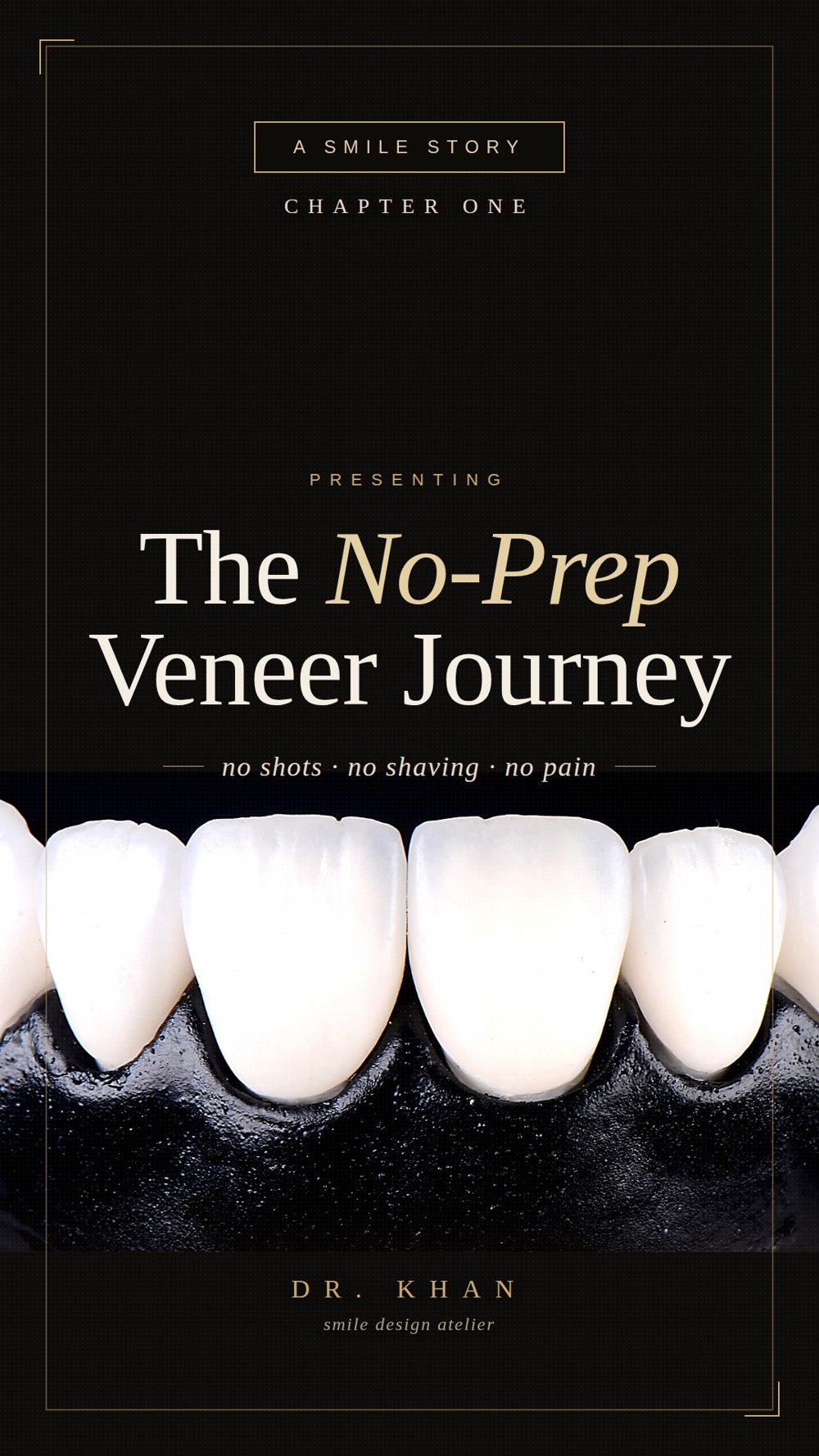
The most common question I hear — usually within the first five minutes of a consultation — is some version of "can I get the kind where you don't shave the teeth?" It's the right question. Here's the honest answer, before you're ever in the chair.
Smiles that minimal prep veneers flatter most
No-prep porcelain works by adding a fine, hand-crafted layer over your natural teeth. That single fact predicts who it suits. Smaller or short teeth gain proportion. Gaps and spacing close beautifully, because the porcelain has somewhere useful to go. Worn edges — teeth ground shorter over years — regain the length they've lost. Narrow smiles that show dark corridors at the sides gain fullness. And teeth dulled or discolored beyond what whitening can fix take on a controlled, natural brightness.
If you recognize yourself in that list, there is a good chance a minimal prep approach can deliver everything you're hoping for without a single irreversible change to your teeth.
When minimal prep is the smarter call
Some smiles need a little honesty at the design stage. Because prepless veneers add rather than subtract, teeth that are already prominent — that lean outward, or dominate the lip line — can end up looking heavier under added porcelain. Mild rotations and overlaps sometimes need a corner softened or a surface refined by a fraction of a millimeter so the veneer sits flush instead of proud.
That's minimal prep: conservative refinement confined to the enamel surface, measured in tenths of millimeters, done only where the design demands it. It preserves the enamel bond that gives porcelain its best foundation while avoiding the bulk that gives bad veneers their reputation.
The cases where I'll tell you no
A boutique practice earns trust by what it declines. Significant crowding or misalignment is usually an orthodontic conversation first — aligning teeth before veneering them almost always produces a better, longer-lasting result than porcelain used as camouflage. Active gum disease or untreated decay must be resolved before any cosmetic work; porcelain over an unhealthy foundation fails, full stop. Severe grinding needs a management plan — often a night guard — before an investment in porcelain makes sense. And occasionally a smile simply doesn't need veneers at all: whitening and a small amount of bonding get some patients everything they wanted at a fraction of the commitment.
If any of those describe you, you'll hear it from me directly, along with what I'd do instead.
What determines the answer
Candidacy isn't guessed from a photo on Instagram. It comes from a proper study: how your lips move over your teeth when you actually laugh, the proportions of your face, the condition of your enamel, your bite, and — just as important — what "natural" means to you. That study is the first thing that happens at a consultation here, and you'll leave it knowing exactly which approach fits your smile and why.
New to the terminology? Start with minimal prep veneers, explained — then come talk about your smile specifically.
Book a Consultation